

Recent article prompting air pollution fears around Whatcom County animal farms exemplifies negative reporting on farming based on faulty assumptions
Residents of Washington state’s most northwestern jurisdiction, Whatcom County, may now believe they’re breathing dangerous air pollution from animal farms thanks to a misleading article in the local Cascadia Daily News. But there’s much more to the report’s failure than meets the eye.
“Animal feeding operations are increasing Whatcom’s air pollution, study finds,” the article’s misguided original headline trumpeted. Its initial sub-headline doubled down on the misinformation, reading “County has the fourth most animal feeding operations of all U.S. counties.”
In reality, Whatcom County is home to none of the type of “animal feeding operations,” or “AFOs,” examined in the national study the article cited. The only reason the county has so many separate animal farms–incorrectly targeted by the article–is because the area’s farms are so small. Smaller farms means less potential for even minor negative air quality impacts–exactly the opposite of what the article tried to claim.
The troubled piece continues a disturbing trend among media outlets desperate for sensational headlines that go for readers’ emotional jugular–fear, uncertainty, doubt and outrage–by making false assumptions about farming based on incomplete and inaccurate “science” studies.
The University of Michigan and UC Santa Barbara study looked at huge cattle feedlots and hog farms in Kansas, Texas and California, and incorrectly stretched those impacts onto all animal farms of any kind, ignoring dramatic variations in farming practices, climates, and more.
Not only were the study’s assumptions deeply problematic, but Cascadia Daily took the bad assumptions a step further by applying them directly to Whatcom animal farms, disregarding the fact that Whatcom’s farms are nothing like the kinds of “animal feeding operations” the research tackled.
Faulty assumptions built on misleading data don’t ever make for good journalism.
“‘If you live in a county with many AFOs, that’s a problem,’” the article quoted the study’s lead author Sanaz Chamanara. The quote amplified the piece’s fear factor while completely overlooking the stark differences between the AFOs she studied and the local news article’s target.
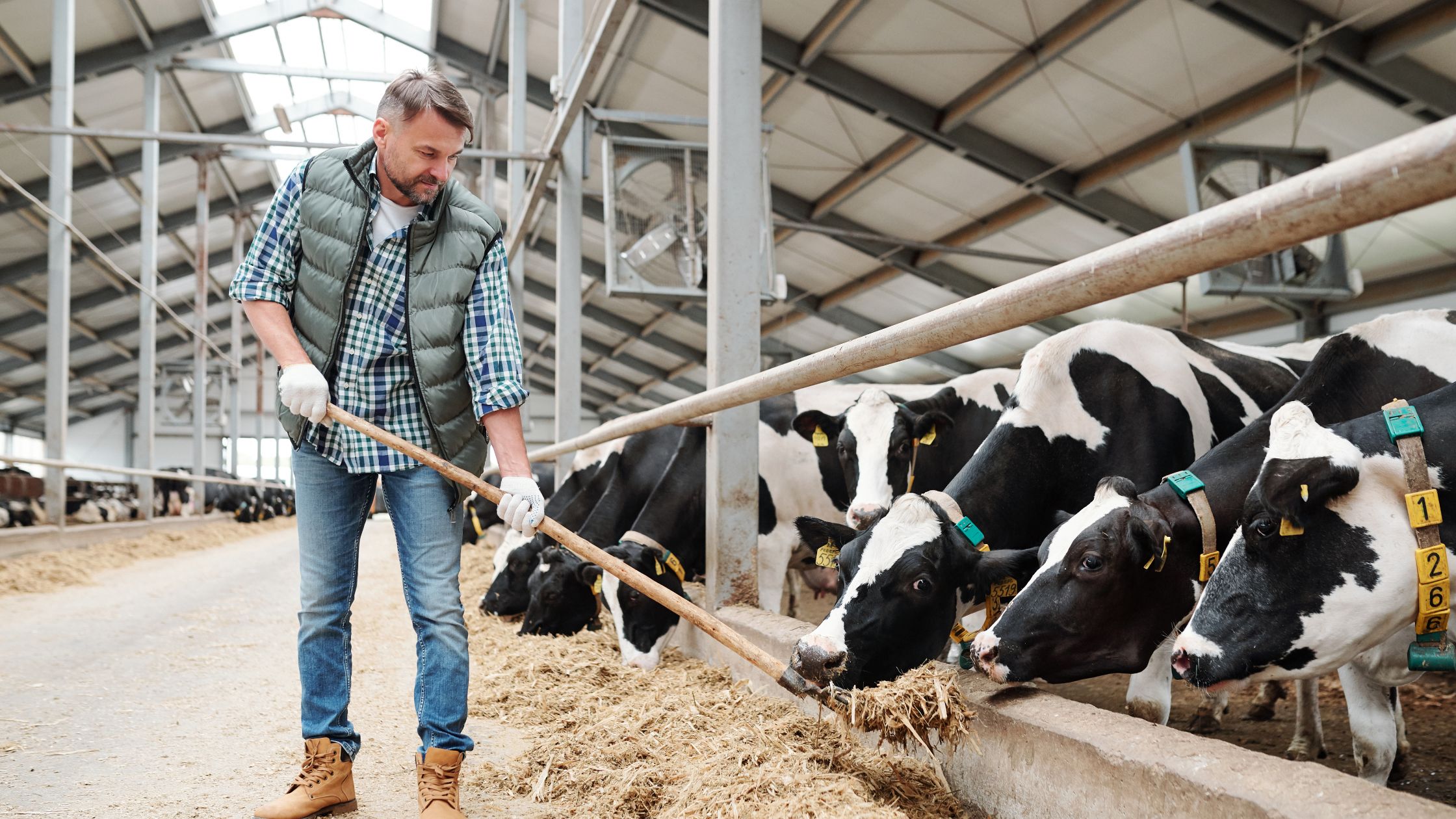
The old idiom ‘comparing apples with oranges’ doesn’t even begin to do justice to this obvious mismatch. Animal farms in Whatcom County are among the most sustainable in the nation and arguably the world, surrounded with fertile pasture and cropland, frequently housing animals indoors to shelter them from heat, cold and the region’s famously rainy weather. Even the area’s largest farms are quite small by national standards. The very practices Whatcom County farmers use to raise animals are frequently cited as solutions to the problems Chamanara’s study was presumably tackling.
Even worse, the article initially included an “interactive” map of Whatcom County, outlining in red the private properties where the study claimed potentially-polluting AFOs existed. A quick review by Save Family Farming’s local farming advocacy affiliate Whatcom Family Farmers immediately showed that many of the outlined properties hadn’t housed any animals for decades, posing troubling questions about the credibility of the entire study’s data.
Thankfully, editors removed the map in response to the farmers’ alarm, in addition to changing the article’s headline and sub-headline, but the damage was done. The fact that the publication was quick to take the reckless approach of directing the public to specific private properties it falsely claims are a possible threat to public health and safety remains deeply concerning.
Unfortunately, when Whatcom Family Farmers reached out to Cascadia Daily News with these concerns, the publication only made minor edits. Despite Whatcom Family Farmer’s repeated attempts to communicate its deeper qualms with the article, Cascadia failed to touch the story’s faulty underlying assumptions, preferring instead to just add in additional brief quotes from the farmers and chalk it all up to a difference of opinion.
But the truth is that it’s not a matter of opinion at all. It’s a difference between fact and fiction.
The article, while sporting a fear-inducing headline to generate clicks, failed to share any factually accurate information about Whatcom animal farms–even with editors’ subsequent changes. The numbers don’t align with any verifiable local data. In fact, neither the article, nor the study–and not even their authors–ever defined what they meant by an AFO. Instead, they linked to a broad EPA description so vague that it could apply even to a homeowner with a few chickens in their backyard.
All of this serves not only to misinform this “news” story’s readers, but also to unfairly and unnecessarily expose even the most responsible farmers to ugly public backlash and targeting. And these risks are not abstract. In an era when unhinged activists have harassed, sabotaged and even directly harmed those they’ve been led to believe are causing various political and social harms, there’s no way to justify publishing red lines around small family farms that have done nothing wrong.
Think that’s overly dramatic, or even paranoid? Note that the Cascadia Daily article, in addition to the flawed study and the EPA, cites an institution whose founder has advocated for the end of all animal agriculture, and even characterized “all forms of farming” as “outdated and barbaric.” That’s not neutrality. That’s ideology. The fact that such a source was used hints at the possibility there are much more nefarious motives behind the misinformation than simply informing readers in the name of public health.
Good farmers should never be vilified just because a researcher over 2,000 miles away, peering through Google satellite images, makes false claims about their farm. And when a news outlet dismisses credible concerns raised by knowledgeable local advocates, it results in what could be reasonably called ‘journalistic malpractice.’