

In the fight to preserve family farms, the perceived enemy is often large corporations. Save Family Farming’s recent documentary “Losing the Farm” told the story of the Bedlingtons, one more family that had to shut down their farm due to insurmountable external costs and pressures. This story is part of a broader trend where family farms are vanishing, selling their farms, and are often replaced by expansive corporate farms. The prevailing narrative suggests that to survive, farms must either scale up or shut down. But is this simply the inevitable progression of the agricultural industry?
A particularly harsh comment on the “Losing The Farm” YouTube channel encapsulated this viewpoint: “That’s just the way of the future. We don’t see any family-run automobile manufacturers. The industry became corporate, and that’s just the way things happen.” This perspective begs the question: Should families in agriculture resign themselves to this fate?
THE PROBLEM
Tyson Allred, farmer and Save Family Farming board member, shared a more nuanced and insightful perspective on this question. When asked about the assertion that the corporatization of agriculture is an inevitable evolution, he offered a thought-provoking response: “It isn’t the corporate farms that are the problem. The problem is the government. It’s the excessive government regulations that are overwhelming and driving costs too high for family farms to continue operating. Therefore, their only option is to sell, and the only ones who can afford to buy the farm and the land are large corporations with heavy backers who can take the risk. It’s not corporations; it’s the government.”
With that statement, a lightbulb went off, shedding light on the underlying issues plaguing family farms. Is this consistent overregulation by the government of one of the most important industries in our nation what we want? Do we, as citizens, trust the government enough to hand over more and more control of agriculture throughout the coming years? Do we give up and accept that their family’s access to food is dependent on the dictates of those in power? Family farms are fighting to hold out against that dystopian threat.
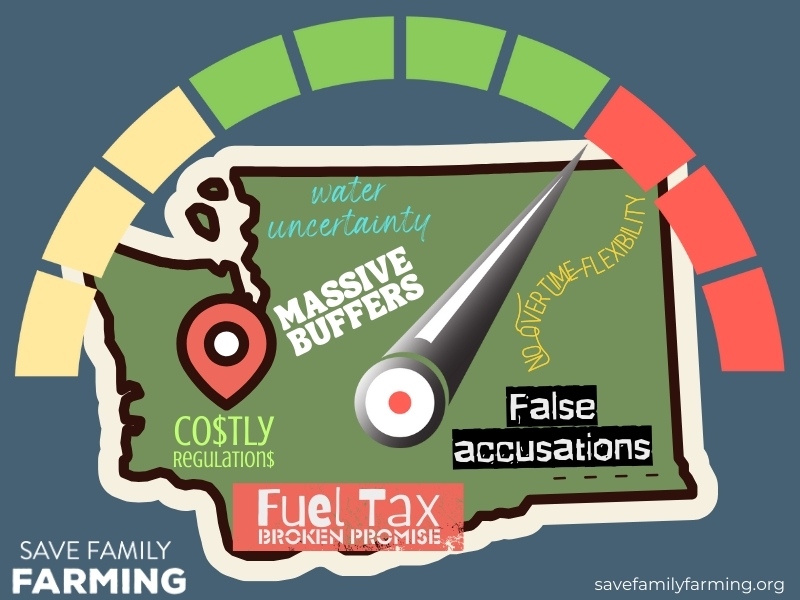
The regulatory environment imposed by the government has become increasingly burdensome, creating a financial strain that small, family-run farms struggle to bear. Unlike large corporations, which have the resources to navigate and absorb these regulatory costs, family farms find themselves squeezed out of the market.
Excessive regulations often come with high compliance costs, which can include everything from environmental mandates to labor laws. While these regulations are designed under the guise of ensuring safety, sustainability, and fair labor practices, they disproportionately impact smaller farms. The administrative burden and associated costs create a barrier that many family farms cannot overcome.
Also, government policies can inadvertently favor large-scale operations. Subsidies, tax breaks, and other financial incentives are often more accessible to large corporations that have the expertise and resources to apply for and manage these benefits. Smaller farms, on the other hand, may lack the necessary infrastructure to take advantage of these opportunities, putting them at a further disadvantage.
THE CONSEQUENCES
The consequence is a troubling trend: family farms, unable to sustain themselves under the weight of regulatory pressures, are forced to sell. The buyers are typically large corporate entities that can afford to take on the financial risks and costs associated with farming today. This dynamic is not just a shift in the agricultural landscape; it’s a loss of stability, democratic authority, and community. Family farms are more than just businesses; they are custodians of the land. We need to decide who is a better custodian, farmers or bureaucrats.
THE SOLUTION
If we are to preserve the family farm, the solution is not to resign ourselves to corporatization but to address the root causes of their decline. This requires a critical examination of government policies and regulations to ensure they support, rather than hinder, family farms. Streamlining regulatory processes, offering financial support tailored to smaller farms, and ensuring fair competition are essential steps in creating a more equitable and secure agricultural sector.
The demise of family farms is not an inevitable consequence of industrial progress but a symptom of a flawed regulatory environment. By recognizing that it is the government’s policies, not corporate expansion, that is the true threat, we can begin to advocate for changes that will protect and preserve the legacy of family farming for future generations.