

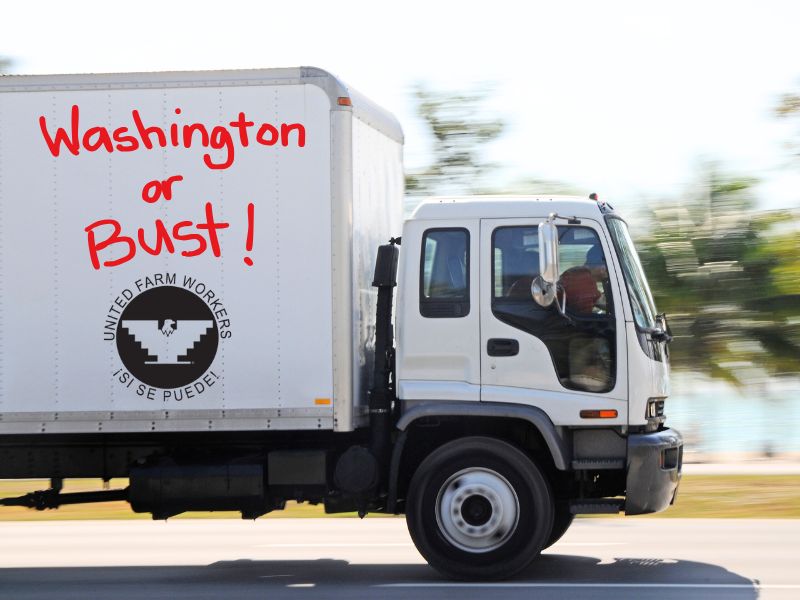
Farmworker rights activist exposes ugly truth about United Farm Workers in California that’s forcing dwindling union to look to Washington state for workers unaware of its true track record
EVERSON, Wash. – A farmworker rights activist is speaking out about United Farm Workers’ efforts to change Washington state laws to allow the labor group to establish itself here. California Farm Workers & Families founder Jesse Rojas is warning workers to beware because of the organization’s dismal track record in California.
Rojas says it’s no surprise that UFW, the labor union famous for its activism in California in the 1960s, now represents barely one percent of farmworkers in the state where it began.
“They’ve dealt with the UFW before, and they’re like, ‘No, no, no. We’ve dealt with that before. We don’t want it,’” Rojas said of many of the California farmworkers he works with. “Numbers don’t lie. If you look at the UFW, they’ve lost over 90 percent of its members.”
The UFW has increasingly been advocating for a change in Washington state law that would pave the way for the union’s brand of farmworker organizing. Supporters are looking ahead to the 2025 legislative session in Olympia as an opportunity to pass legislation to further the group’s growth goals.
But why is UFW looking to Washington state to revive the flagging organization?
“The UFW is just like the cartel and the mafia in Mexico, where I ran away from,” Rojas said. “When they get burned in a state, like for example the cartel and mafia in Mexico, what do they do? They move to another state.”
One of the most egregious examples of how UFW takes advantage of workers happened at what was one of California’s biggest fruit growers, Gerawan Farming. After doing nothing for workers there for decades, in 2012 the union swooped back in to start cashing in on union dues taken out of workers’ paychecks.
Within a year, workers organized a vote to get rid of the union, but because of UFW pressure, the union-friendly California Agricultural Labor Relations Board (ALRB) blocked the process until 2018, when the California Supreme Court finally forced the ballots to be counted.
The result? The workers had voted 5-to-1 to get rid of UFW.
Here in Washington, union organizers, as well as union-friendly lawmakers and agency leaders, want the legislature to approve a so-called ‘agricultural labor relations act.’ This would not only open the door to farmworker unionization, but also create an agricultural labor relations board like the California board that blocked the Gerawan Farming workers’ votes.
Unfortunately, such an arrangement has proved in California to be harmful towards workers, taking advantage of the union dues that come out of their paychecks while simultaneously working to silence those same workers’ voices.
Rojas points to former California ALRB chairman William Gould, who resigned from the position in anger, venting to the Los Angeles Times. “Gould has said the board spent more of its time on petitions from workers trying to kick out the UFW than on petitions to join the union,” the Times reported.
Rojas recently spoke about UFW’s track record and the problems with California’s ALRB on The Farming Show, issuing a warning to Washington farmers and workers.
“I just want to tell your audience in Washington, in the industry, in farming: learn from the mistakes of California.”
Related: