

Tree fruit leader’s new column raises eyebrows, exposes harmful disconnect between farmers and public
The farmers who grow apples, cherries, pears and other tree fruit in Washington are struggling, but the leader of the state tree fruit community’s advocacy group says many people may not be aware there’s a problem.
Jon DeVaney, president of the Washington Tree Fruit Association, is raising eyebrows with a new column in an industry publication, headlined “Growers are not OK.” In it, he argues farmers have become good–too good, in fact–at weathering storms, whether they be literal or economic.
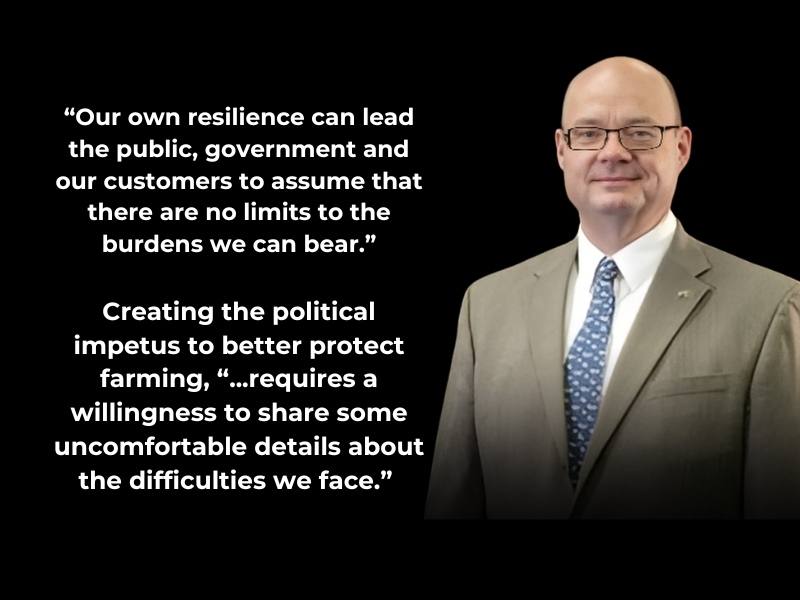
“Our own resilience can lead the public, government and our customers to assume that there are no limits to the burdens we can bear,” DeVaney writes in the Good Fruit Grower article, explaining that while market conditions for Washington tree fruit have been challenging for a few years, they became “truly dire” in 2023.
Despite the grim outlook for many orchards in Washington, he points out the struggles are often not visible to the public, and multigenerational farmers often keep quiet as they grapple with a deep sense of failure as their family business falters.
“The silence from individual growers, at scale, can lead to the perception — by the public, media and elected officials — that all is well with us,” writes DeVaney. “This can cause them to discount our collective calls for relief or, at the very least, a moratorium on harm.”
DeVaney joined host Dillon Honcoop on the Dec. 7 edition of The Farming Show to talk about the insights he shared in the Good Fruit Grower column. Both recall a glaring example of the disconnect: in Nov. 2023, anti-farm activist Edgar Franks in official testimony in the state legislature, claimed growers were enjoying “record profits” – despite the reality being quite the opposite.
The fact that Franks’ expected such an blatantly false statement to be believed shows the lack of public awareness that’s resulted from farmers “suffering in silence,” DeVaney says.
“Many of us in agriculture like to complain about reporters’ ignorance of agricultural issues or the coverage we receive,” writes DeVaney, “but then many decline to talk to those same reporters.” Honcoop says he had experienced that exact phenomenon during his time working in news media.
DeVaney says changing the reality of the lack of public awareness about farming’s struggles, and thus creating the political impetus to better protect farming, “…requires a willingness to share some uncomfortable details about the difficulties we face.”